
San Pablo's Historical Directory Shelf
San Pablo does not publish a stand-alone, exhaustive city-directory shelf list. The useful collection is regional: San Pablo entries were often folded into Richmond-area volumes before and after incorporation. The verified bibliographic anchor is the Richmond, San Pablo and Martinez Directory by R. L. Polk & Co. for 1912-1913. Later Richmond volumes are cited, but the exact year run held locally remains unverified. Treat every later date as a lead to confirm with the holding institution.
| Collection | Years | Where Held | Access |
|---|---|---|---|
| R. L. Polk & Co., Richmond, San Pablo and Martinez Directory | 1912-1913 verified | Bibliographic citation in the City of Richmond historic-context material; locate a copy through catalogs or CCCHS | Confirm the physical or digital holding first |
| Richmond city directories with San Pablo-area entries | Later twentieth-century volumes; exact run unverified | Contra Costa County History Center and library/interlibrary catalogs | Call before promising a year |
| Chinese business directory covering San Pablo | 1952 | UC Berkeley Bancroft Library, F870 .C5 C36 1952 | Catalog and reading-room access |
| San Pablo Bee, San Pablo News, and The News | 1923-1982 title sequence | County library newspaper holdings and Pinole microfilm | Use the title and date range together |
| CCCHS directories and annual assessor books | Directory holdings; assessor books 1850-1910 | History Center, 724 Escobar St., Martinez | PACT terminal and onsite research |
| Local History Connection and census databases | Digitized collections; census 1790-1950 | Contra Costa County Library resources | Free Local History Connection; library access varies |
The gap is part of the research result. No official complete year-by-year shelf list, verified scan of the 1912-1913 volume, or verified local criss-cross run was found online. The collection table therefore separates a confirmed citation from a promising but unconfirmed run. A reader who needs one exact year should ask the library or History Center to check the catalog before traveling.
Why San Pablo Uses Richmond Volumes
Publishing boundaries explain why a local directory may carry Richmond in its title. San Pablo was not incorporated until April 27, 1948. Before that vote, county and township records, Richmond newspapers, and regional business directories supplied the public print trail. The official vote was 1,437 to 838 after residents rejected annexation to Richmond. A pre-1948 entry should therefore be read as evidence about a place in the West County publishing market, not as proof that a modern city office produced the book.
Wartime change made that regional trail more important. The city describes growth from about 2,000 residents to 25,000 during the Richmond shipyard boom, followed by rapid construction on small lots. A family may appear in one thin early directory, then become easier to trace through postwar directories, newspapers, the 1940 and 1950 census schedules, and permit records. That shift is a local story, not a reason to fill an absent year with a guess.
Local history clue. The 1948 incorporation vote marks a change in government records, but it does not erase the Richmond-area directories that document earlier San Pablo households.
San Pablo Directory Research at CCCHS
The Contra Costa County History Center is the key in-person fallback when a city directory scan or date is uncertain. Its holdings include directories, annual assessor books from 1850-1910, more than 1,700 maps, physical court records through 1911 with some series reaching into the 1950s, probate and naturalization material, and local clippings. More than 9,300 indexed historic cases name over 61,000 people. Those numbers make the center useful for a directory clue that needs a second record, especially when a surname or street has changed.
Visit at 724 Escobar St., Martinez, or call 925-229-1042. Hours are Tuesday through Thursday, 9 a.m. to 4 p.m., plus the first and third Saturdays from 10 a.m. to 2 p.m. An appointment is suggested. The free PACT terminal provides access to digitized photographs, nineteenth-century newspapers, maps, county histories, Nilda Rego columns, and a general collection search. Remote questions are accepted by email, phone, mail, or web form.
History Center Access
Address: 724 Escobar St., Martinez
Phone: 925-229-1042
Onsite tool: PACT terminal, free
Research help: $20 per hour for members and $30 per hour for nonmembers for personal research
The CCCHS collections description shows the breadth of the holdings, while the research service page explains remote inquiries, appointment planning, and quoted copy or staff costs. Fragile maps may require special handling, personal photography is prohibited, and copies cost extra. Bring a name, a street, an approximate year, and the question the entry should answer.
The Historical Society's collection page provides the source for this holdings overview.
The collection view reinforces the practical point: a San Pablo city directory search may require a shelf check, an index lookup, or a staff-assisted request rather than a single online scan.
Library Tools for San Pablo History
Contra Costa County Library resources fill the gaps between printed volumes. Ancestry Library Edition is available in a library building without a card. HeritageQuest Online includes every extant United States census from 1790 through 1950, along with local and family-history books. Local History Connection is free without a card and brings together photographs, documents, maps, newspaper clippings, artifacts, and personal papers from the library and local institutions.
The Walnut Creek Library holds the system's large genealogy collection, established with help from the Contra Costa County Genealogy Society. Books, pamphlets, newsletters, magazines, and microform emphasize American regional, family, military, immigration, church, and ethnic genealogy. San Pablo Library can route questions to Pinole or Richmond for newspaper microfilm and to Walnut Creek for genealogy help; its listed phone is 510-374-3998.
The county library database list is the source-linked starting point for these tools. A library database can reveal a census household or a scanned clipping, but it does not turn an unverified later directory year into a confirmed run.
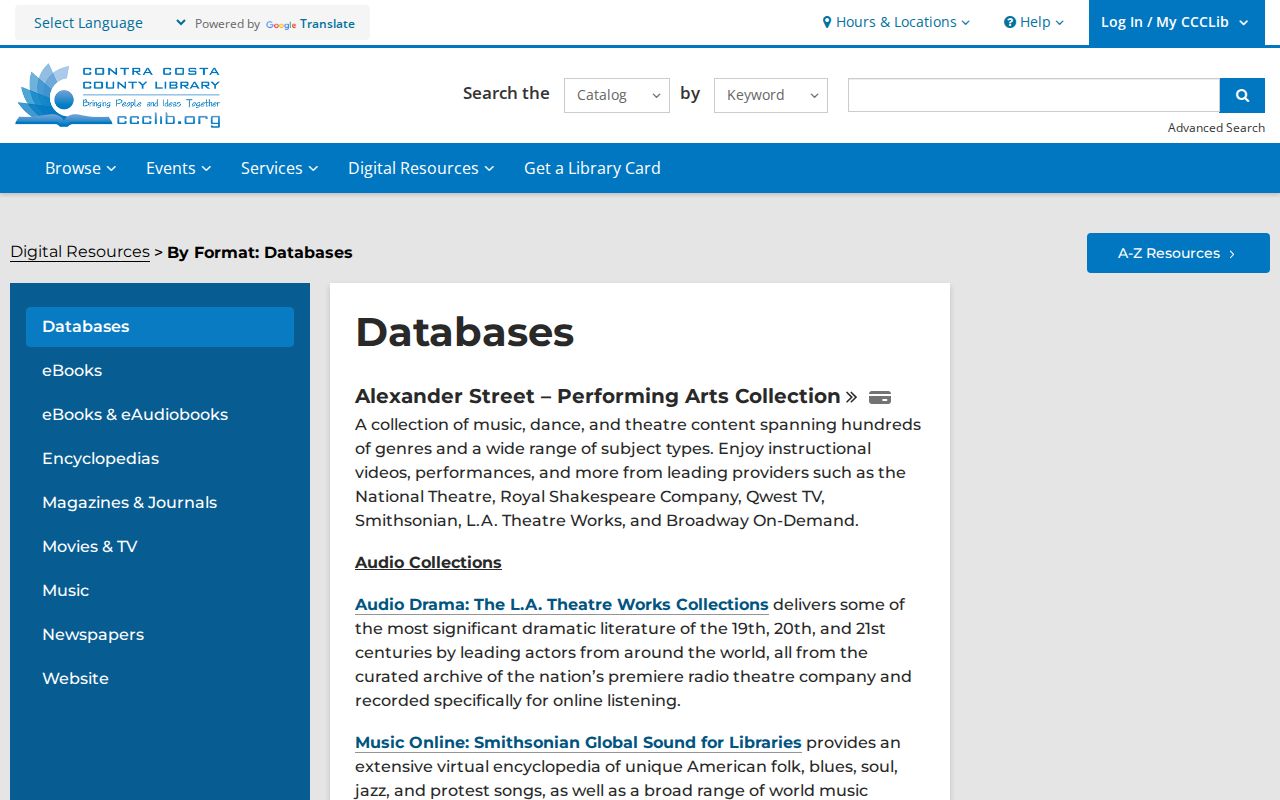
The library database screen points toward several record types, so compare the source label and date before treating a name match as a directory entry.
Reading a San Pablo Directory Entry
A Polk-style city directory usually begins with an alphabetical name section. Read the whole line before drawing a conclusion. Names, initials, a spouse in parentheses, a shortened street name, and a small mark beside the address can each change the meaning. The 1912-1913 San Pablo-inclusive volume is bibliographically verified, but an official scan was not located. The exact marks in that edition must be checked at a holding institution.
| Name | Surname followed by given name or initials; spouses may appear in parentheses. |
|---|---|
| Occupation | An abbreviated occupation or business line can help distinguish people with the same name. |
| Spouse clue | A spouse, widow notation, or a second adult at the same address can set a useful date marker. |
| Address | House number and abbreviated street name; a volume may use r for resides or rooms and h for householder or home address. |
| Owner or renter mark | Some volumes distinguish tenure, but the symbol and its key must be verified for that issue. |
| Directory order | The alphabetical section maps name to address; a later criss-cross section may reverse street and address to occupant. |
- Criss-cross directory
- A reverse directory arranged by street or address, where the address leads to a household name when the volume provides that section.
- Householder index
- An index centered on the principal listed adult at an address; it may omit other residents.
- Abbreviation key
- The volume's list of short forms and symbols. Find it before interpreting
r,h, widow marks, or street names. - Index versus image
- An index is a pointer created from the source; a page image or original volume supplies the wording that the index may shorten or misread.
Sample record inventory. A useful transcription keeps the name as printed, every initial, spouse or widow note, occupation line, street number, street abbreviation, mark, page, volume year, and source location. That record lets a later reader test the same household without trusting a loose name match.
Trace a San Pablo Household Across Directory Years
Directory tracing works best as a dated comparison, not a single lookup. Begin with a known person, address, or family clue. Keep the original spelling and record the source before moving to another year. Then pair directory years with the released census schedules, newspapers, deeds, probate, and permits that can explain a move or a missing line.
- Find the earliest useful name entry and transcribe the name, initials, spouse clue, occupation, address, and symbols exactly.
- Check the same surname and address for other adults. Do not label a relative, lodger, or household role unless the source supports it.
- Move one issue earlier and one later. Note a new address, a changed spouse clue, a widow notation, or a changed business line as a hypothesis.
- Use a street or criss-cross section, when present, to inspect nearby numbers and bridge a spelling error. Confirm the address against a parcel or legal description.
- Pair the run with the 1910, 1920, 1930, 1940, and 1950 census schedules. Census ages, relationships, birthplaces, and tenure add context that a short directory line cannot give.
- Close an endpoint with San Pablo newspaper notices, the CCCHS obituary or probate index, and a recorded deed when a death, sale, or transfer explains the change.
A missing line does not prove that someone left. Canvassing, typesetting, an unlisted adult, an OCR error, a spelling change, or a volume gap may explain it. When a modern name requires official confirmation, the San Pablo resident lookup can add court, vital, license, and business-record checks without turning a historical clue into a present-tense claim.
San Pablo Newspapers Extend the Directory Trail
Newspapers often supply the event that a city directory cannot: an obituary, reunion notice, business advertisement, community announcement, or address tied to a dated story. The county library's historical newspaper holdings guide documents the local title changes and the available formats. Use the exact title, date, and branch rather than searching for a generic “San Pablo paper.”
- San Pablo Bee: 1923-1950.
- San Pablo News: 1950-1980.
- The News: 1980-1982, with Pinole microfilm from November 5, 1980 through April 28, 1982.
- Richmond coverage: Richmond Daily Independent is online for June 7, 1910 through October 1920 and December 1920 through December 1922; successor titles continue on microfilm through 1984.
Pinole microfilm also describes San Pablo title segments from December 9, 1949 through December 1, 1950, and June 27, 1958 through October 29, 1980. West County and Contra Costa Times coverage adds later context through library databases and microfilm. A clipping can identify an address event, but the original date and title should remain attached to the citation.
The newspaper holdings source is the lead for the image below.
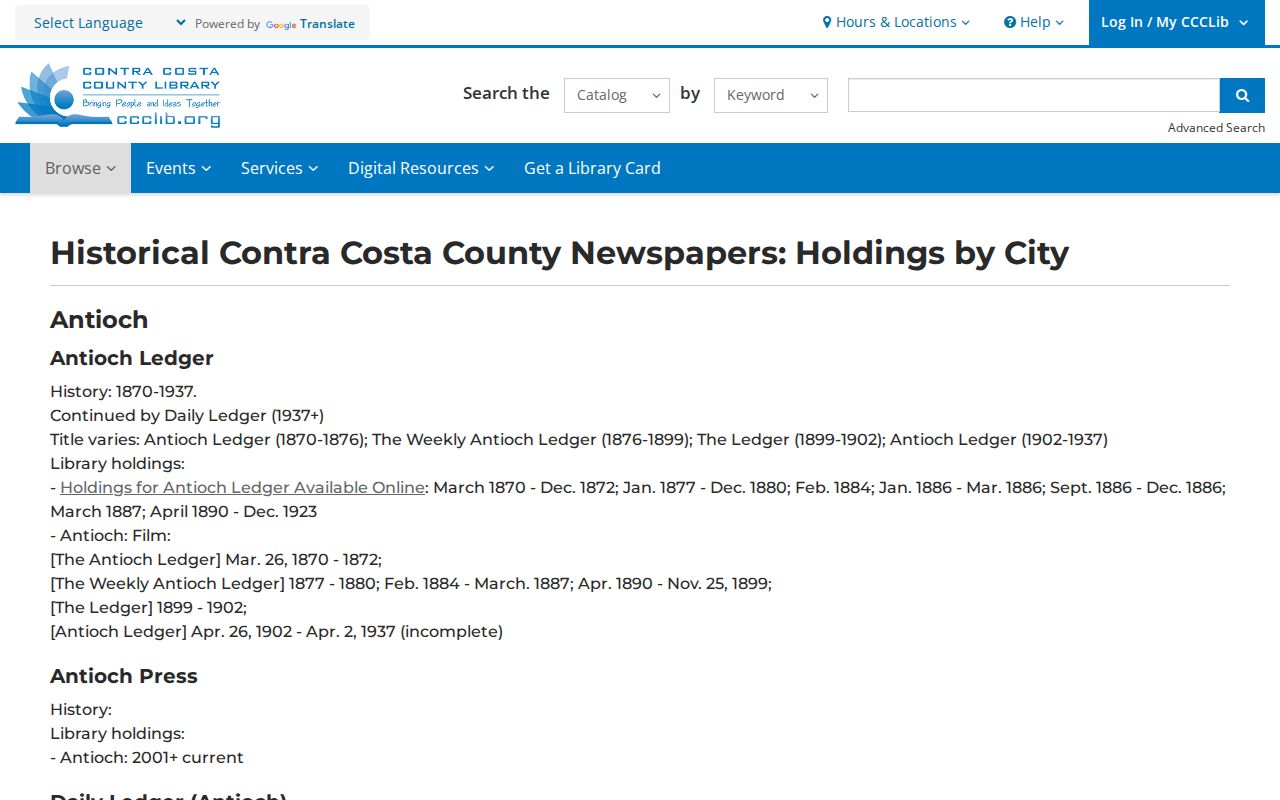
The newspaper-holdings image is useful because it shows why a city directory search may continue at a library branch even when a web search returns no scan.
Note: Search the title lineage before assuming a missing San Pablo issue was never published.
San Pablo's Directory History in Dates
San Pablo's records sit on a longer local timeline than the phrase “city directory” suggests. These dates help select the right custodian and keep municipal, county, and regional evidence in its proper setting.
| 1811-1823 | Ramón Abella's reference, the mission-era farm, and Francisco Castro's 17,000-acre grant precede the modern street grid. |
|---|---|
| 1850-1910 | County-era deeds, tax records, and annual assessor books establish an early paper trail at CCCHS. |
| 1854 | San Pablo township begins in the local record history. |
| 1912-1913 | R. L. Polk & Co. publishes the verified San Pablo-inclusive Richmond, San Pablo and Martinez Directory. |
| 1923-1982 | The San Pablo Bee, San Pablo News, and The News form a local newspaper sequence. |
| April 27, 1948 | San Pablo incorporates by a 1,437-838 vote after rejecting Richmond annexation. |
| 1952 | A Chinese business directory includes San Pablo and is cataloged at Bancroft Library. |
Gaps in the San Pablo Directory Record
The research gap is specific: no official complete year-by-year shelf list was found, no verified digital scan of the 1912-1913 San Pablo-inclusive volume was located, and no local criss-cross year run could be confirmed. Later Richmond city directories are real leads, but their exact coverage must be checked. A catalog record, a staff reply, or a page image is stronger than a search snippet.
When a directory answer stops, move sideways through the CCCHS searchable indexes, the Historical Society archive indexes, naturalizations from 1850-2008, maps, assessor books, probate, and obituary clippings. The goal is not to force every year into a neat sequence. The goal is to preserve what the source says, mark what is missing, and pair a printed clue with an independent record.
Note: Ask for the year, publisher, title, city coverage, and whether a criss-cross section is actually present before ordering research.
Use San Pablo Directories With Context
The strongest San Pablo directory result is rarely just a name. It is a name tied to a street, an address tied to a year, and a year checked against a census, newspaper, map, deed, or probate entry. The 1952 Chinese business directory adds a distinct community and business-history source: it includes San Francisco, Oakland, Berkeley, Richmond, San Pablo, Salinas, Pittsburg, Watsonville, San Jose, and Monterey, and its Bancroft call number is F870 .C5 C36 1952. That record belongs beside, not inside, the verified Polk citation.
San Pablo's early rancho history, township records, Richmond publishing geography, 1948 incorporation, and wartime migration all shape what a printed directory can show. Read the abbreviation key, preserve the exact source, and treat a change in appearance as a question for the next record. That method makes the city directory useful for family history and local history without claiming more than the collection proves.